-
The shortest version
-
The mistake that changed my install checklist
-
Why the pump curve matters more than the nameplate
-
Use the Grundfos pump distributor locator before you order
-
A Home Depot sump pump is not a grinder pump
-
The tools I now keep in every pump kit
-
The industry moved, and so did the checklist
-
Where this advice stops
Stop. If you’re searching for a Grundfos SEG grinder pump, the first thing you should do is not click the “in stock” listing with the fastest delivery. That’s exactly where I was in September 2021, and the mistake cost me $3,200 and a week of client trust. Check the pump curve and the force main before you check your cart. That sentence would have saved me more money than every “dealer discount” I’ve chased since.
I’ve been handling pump replacement and repair orders for eight years. I’ve personally made and documented 14 significant mistakes, totaling roughly $26,000 in wasted budget. I keep a checklist for our team now. This article is the public version of that checklist.
The shortest version
A Home Depot sump pump and a Grundfos SEG grinder pump are both pumps. That’s about where the similarity ends. A sump pump moves clear water from a basement pit. A grinder pump grinds sewage solids and pushes them through a pressurized pipe, often into a municipal sewer or a remote tie-in. Put a sump pump in a sewage application and you’ll be paying for a very unpleasant cleanup.
The question isn’t “which brand is best?” It’s “which pump is right for this specific installation?”
The mistake that changed my install checklist
In 2021, I got a quote request for a basement bathroom rough-in. I checked fixture count, pit depth, and voltage. I ordered a Grundfos SEG grinder pump, showed up with it, and installed it. It ran for about 90 seconds, tripped, then reset. Tripped again. The homeowner heard the alarm controller beeping before I had my tools back in the truck.
The pump was right—or rather, it was right for a different discharge setup than the job had. I sized for the pit but not for the force main. The existing 1-1/4-inch line ran about 220 feet with six 90-degree fittings. I didn’t calculate the friction loss, because the pump curve looked like it had enough head. “Enough” on the curve and “enough” with 220 feet of pipe are different numbers.
Cost breakdown: one extra service call, one access panel modification, a higher-head SEG model, and a lot of fittings. I keep saying $3,200, but if you count the missed hours on the other job, it was closer to $4,500. Honestly, I’m not sure why I still remember the $3,200 number and not the time. Maybe because the invoice is easier to stare at.
Why the pump curve matters more than the nameplate
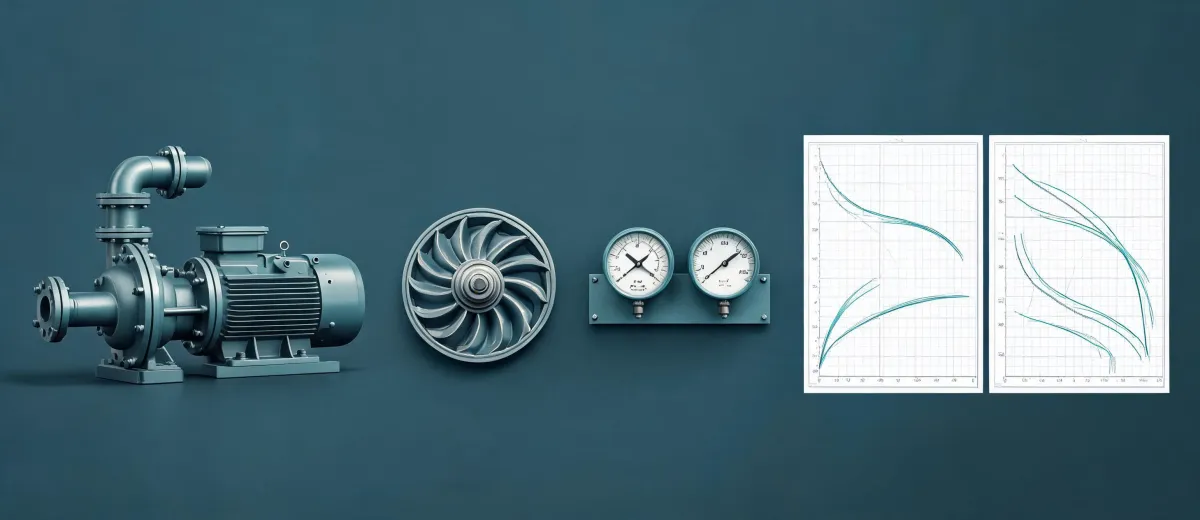
A sales rep can say “one horsepower,” but horsepower doesn’t tell you how many feet of head the pump can produce at the flow you need. Every Grundfos SEG grinder pump has a published performance curve. I should not have needed a full pump class to understand that, but I did. On that 2021 job, the existing pipe was the constraint. The pump’s maximum head looked fine. The pump’s head at the actual required flow did not.
Per FTC guidelines (ftc.gov), a product claim has to be truthful and substantiated. On a pump listing, the substantiation is the curve. If the seller doesn’t show one, treat the listing as a starting point, not a spec sheet.
Use the Grundfos pump distributor locator before you order
Here’s the thing I learned after the wasted-money phase: use the Grundfos pump distributor locator before you buy, not just after the pump fails. I now start every Grundfos job by finding an authorized distributor from the official locator on the Grundfos website. The distributor’s phone techs know the product line, they can pull up the curve with you, and they can tell you what’s actually in stock.
Why do I make this a rule? Because I bought one “new surplus” Grundfos SEG grinder pump from an online reseller at an “18% discount.” It arrived with a different voltage sticker than the listing. The seller’s response was, “we just sell them.” I spent two days and two phone calls trying to find out if the pump could even be used on the job. That’s not a price discount; that’s a bill with extra steps.
Real talk: the distributor locator will not always give you the cheapest price. It gives you support. On a job where the pump is buried in a pit and the mistake means digging it back up, support is worth more than the discount.
A Home Depot sump pump is not a grinder pump
If the job needs sewage grinding, a Home Depot sump pump is not a substitute.
I understand why people try. The price difference is painful. A basic sump pump can do the job for a fraction of the price, and a Grundfos SEG grinder pump is several times that before you add controls. But the sump pump has a screened inlet made for water. It doesn’t have a grinder unit. In a sewage pit, it’ll take on a wet wipe or a piece of debris, the impeller can jam, and the motor can overheat. The cleanup cost can be more than the difference in purchase price.
Look, I’m not bashing the sump pump from Home Depot. It’s fine for its job. It’s just not a grinder pump. If someone quotes you “we can save money with a standard sump pump,” run the numbers with the future cleanup included.
The tools I now keep in every pump kit
After the pump side, the tool side is boring but important. When I’m wiring a pump control panel, I always use a VDE screwdriver set. Not because I plan to touch live parts. Because the insulation gives me one second to change my mind, and a “I’ll be careful for one minute” moment only lasts one missed second.
I remember one job where I used a regular screwdriver to tighten a float switch terminal with the power on. Nothing happened. That’s what every electrical near-miss looks like afterward: nothing happened. Then I bought a VDE screwdriver set and stopped feeling lucky. The VDE mark means the tools are insulated and tested to something like IEC 60900. It’s not an upsell; it’s a seatbelt.
And yes, tools evolve. If you’ve ever asked, when was the first cordless drill made—I believe the first Black & Decker cordless drill came in 1961. Don’t quote me on the month. The point is that even 60 years ago, drills were going battery-powered, but the torque and battery life we have now are not the same game. I use a 20V brushless drill on pump installs, but it wouldn’t matter how good the drill was if I wired the control panel wrong.
The industry moved, and so did the checklist
It took me about three years and 60 pump orders to understand that the pump itself is rarely the problem. The problem is what’s around it: pipe sizing, electrical supply, sourcing, and controls. The basics haven’t changed—you still need to understand head, flow, and solids handling. But the execution has changed. In 2020, a basic float switch and a two-way alarm were normal. In 2025, I see more Grundfos controllers with electronic level sensors and alarm outputs. What was “best practice” in 2020 may not apply in 2025.
Honestly, I’m not sure why some installers still skip the performance curve. My best guess is that curves look like math, and math looks optional when you’re in a hurry. It isn’t.
Where this advice stops
If you’re in the middle of a sewage backup, don’t read this article again—call a licensed plumber. This isn’t a procedure guide; it’s a caution log. Also, if your application is high-temperature water, corrosive chemicals, or slurry, a grinder pump might not be the right family at all. I don’t design those systems. I know enough to say I don’t know enough.
And if your job is just water from a basement sump, go ahead and buy the Home Depot sump pump. That’s the point: match the machine to the job, then find a source you can call when it moves.