-
Who This Checklist Is For (and What It Won't Cover)
-
Step 1: Calculate Actual Flow Demand — Not the Catalog Number
-
Step 2: Verify Head Pressure — The Number Most People Skip
-
Step 3: Check Controller Compatibility Before You Buy
-
Step 4: Run the 3-Year TCO — Not the Unit Price
-
Step 5: Confirm Parts Availability and Documentation
-
Step 6: Prepare the Right Tools Before Install Day
-
Step 7: Log Commissioning Data and Set a Maintenance Baseline
-
Common Mistakes (and What They Actually Cost)
Who This Checklist Is For (and What It Won't Cover)
If you're a facilities manager, plumbing contractor, or procurement lead trying to specify a Grundfos circulating pump for a tankless water heater, this is for you. I've been managing equipment and parts budgets for six years now — roughly $180,000 in cumulative spending across pump systems, spare parts, and related hardware tools — and I've made enough expensive mistakes to know where the money actually leaks out.
When I first started specifying circulator pumps, I assumed the only thing that mattered was flow rate. Match the GPM to the system, done. Three failed installs and one $3,400 rework invoice later, I learned that flow rate is maybe step one of seven.
What this checklist won't cover: residential single-fixture setups. If you're working on one shower and one sink, most of this is overkill. For commercial or multi-unit tankless systems? Keep reading.
Step 1: Calculate Actual Flow Demand — Not the Catalog Number
Most people look at Grundfos circulator pumps and pick the one whose max flow matches their pipe size. That's backwards.
Flow demand depends on three things:
- Total recirculation loop length (supply + return)
- Number of fixtures served simultaneously
- Pipe diameter (1/2" vs 3/4" changes everything)
For a commercial tankless system with a 150-foot loop and 6 fixtures, you're typically looking at 2–4 GPM minimum to maintain consistent hot water at all points. Undersize it and you get cold slugs. Oversize it and you're paying for turbulence, noise complaints, and premature seal wear.
Note to self: always verify loop length against as-built drawings, not the original design plans. They rarely match.
Step 2: Verify Head Pressure — The Number Most People Skip
Here's the one that bit me: head pressure. Flow rate gets all the attention, but if the pump can't overcome the system's friction loss plus vertical lift, you're looking at a pump that runs hot and dies early.
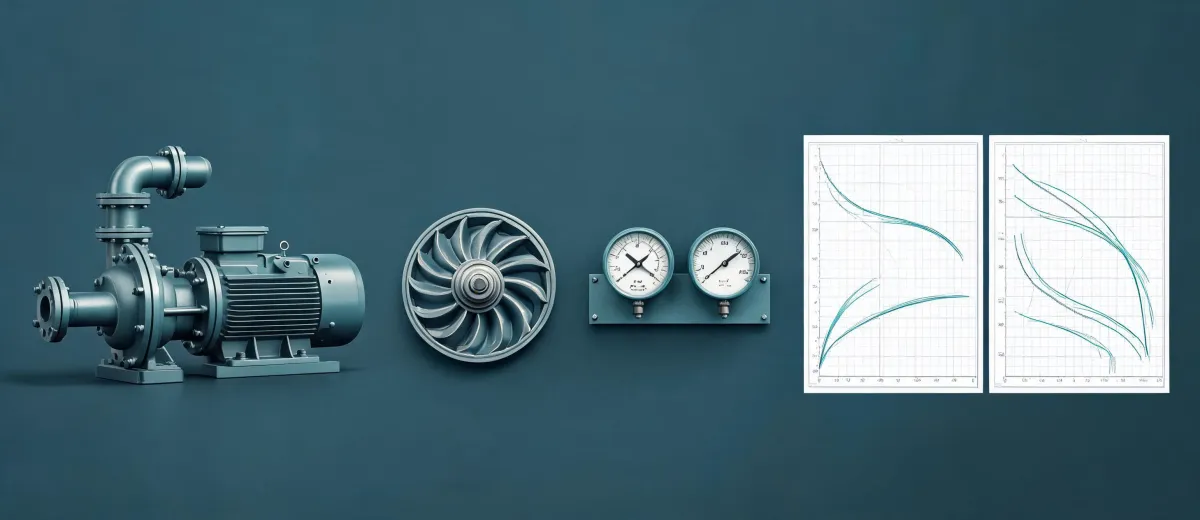
Quick calculation: Total Dynamic Head (TDH) = vertical lift + friction loss in the loop. For a typical two-story commercial install, that might be 15–25 feet of head. A pump rated at 4 GPM at 1 foot of head won't deliver 4 GPM at 20 feet. Check the pump curve — the actual performance curve, not the box spec.
Grundfos publishes full performance curves for every circulator they make. If your vendor can't produce one in under 30 seconds, that's a flag.
Step 3: Check Controller Compatibility Before You Buy
This is where the "grundfos circulating pump for tankless water heater" spec gets tricky. Some Grundfos models (like the ALPHA series) have built-in smart controls — AUTOADAPT, proportional pressure, etc. Others need an external relay or aquastat to interface with the tankless unit's control board.
If the pump and the heater controller don't talk to each other, you get one of two failures:
- The pump runs 24/7, burning electricity and wearing out the motor
- The pump never activates because the signal never reaches it
Neither is cheap to fix after the drywall goes up.
Step 4: Run the 3-Year TCO — Not the Unit Price
The numbers said go with the cheaper pump — 15% less per unit, similar specs on paper. My gut said something was off. I went with the cheaper option anyway. Eighteen months later, we'd replaced two of the six units and paid a technician twice for emergency calls.
Total cost of ownership for a circulator pump includes:
- Unit price
- Energy consumption (a pump running 8,000 hours/year at 50W vs 90W is a $40–$70 annual difference per unit)
- Replacement parts (seals, impellers, control boards)
- Labor for service calls
I built a simple spreadsheet after getting burned twice on "budget" options that weren't. Now every pump quote gets a TCO column. The cheapest unit has never won.
Step 5: Confirm Parts Availability and Documentation
One thing I'll give Grundfos credit for: their technical documentation is genuinely thorough. Installation manuals, repair kits, performance curves — all accessible without a dealer login. That matters more than most buyers realize.
Before you commit to any pump, check:
- Is there a repair kit available? (Grundfos offers kits for most circulator models — seals, impellers, gaskets)
- What's the lead time on replacement parts? (Ask your distributor for actual stock levels, not catalog availability)
- Is the installation manual available as a PDF? (If you have to call tech support to figure out wiring, that's a hidden cost)
For context: I once spent 45 minutes on hold trying to get a wiring diagram for a competitor's pump. Never again.
Step 6: Prepare the Right Tools Before Install Day
This sounds obvious, but I've watched crews unpack a pump and realize they don't have the right flange fittings or a torque wrench that goes high enough. For most commercial circulator installs you'll need:
- A 3/4 drive socket set (for flange bolts on larger models — the 3/8" set won't cut it)
- Pipe wrenches (two, minimum)
- Thread sealant or PTFE tape
- Multimeter for verifying electrical connections
- Torque wrench rated to the flange spec
The socket set thing caught me once. We had a 3/8" set on the truck, the flange bolts were 1-1/8", and we lost half a day waiting on a supply run.
On documentation: record the serial number of every pump you install. Same principle as a lawn mower serial number lookup — when you need warranty service or a specific parts diagram, the serial number is the only thing that gets you the right information. I keep a simple log: install date, model, serial, system pressure reading at commissioning.
Step 7: Log Commissioning Data and Set a Maintenance Baseline
After the pump is running, record:
- System pressure at the pump inlet and outlet
- Flow rate (measure it if you can — don't trust the spec sheet)
- Amperage draw (compare to nameplate rating)
- Ambient noise level (if it's a occupied building)
This baseline is what you compare against in 12 months when someone says "the hot water feels slower." Without it, you're guessing.
Common Mistakes (and What They Actually Cost)
Mistake 1: Buying on unit price alone. The $200 pump that fails in 18 months costs more than the $320 pump that runs for 8 years. Run the TCO.
Mistake 2: Skipping the pump curve. Flow rate at zero head is meaningless. Always check performance at your actual TDH.
Mistake 3: Ignoring controller compatibility. A pump that can't communicate with the tankless unit is just an expensive paperweight.
Mistake 4: No commissioning log. When something goes wrong — and it will — you need a baseline to compare against. I still kick myself for not documenting the first three installs we did. Diagnosing problems on those systems took twice as long because we had no reference point.
Mistake 5: Assuming "circulator" means the same thing across brands. It doesn't. A Grundfos circulator pump and a generic recirculation pump may look similar but have completely different performance characteristics. Always spec from the curve, not from the category name.
The difference between a system that runs for a decade and one that becomes a maintenance headache usually comes down to the 30 minutes you spend on steps 1–4. That's the part nobody bills for — and the part that saves the most money.