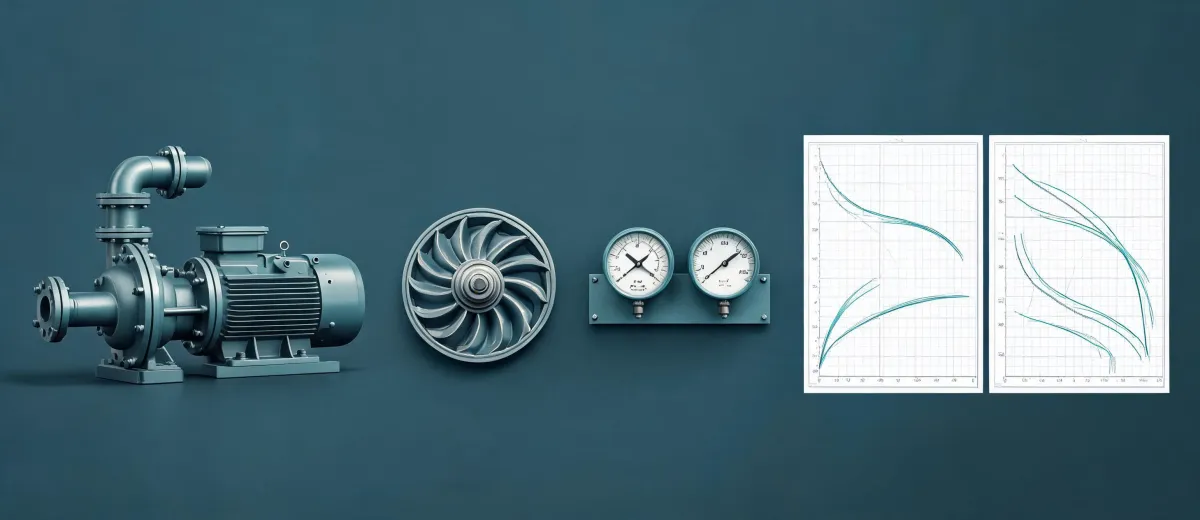
Every pump failure has a critical hour. Sometimes it is a flooded basement that has been filling since 2 a.m. Sometimes it is a processing line that has to run by Monday morning, or a housing society on the outskirts of Mumbai suddenly realising there is no water for the evening shift. In my line of work, I coordinate emergency replacements for commercial and industrial pump systems, and I have learned that the people who fix pumps quickly are not the ones who make the fastest phone calls. They are the ones who compare the right things before they order anything.
When you are under pressure, the choice is rarely between a good pump and a bad pump. It is between two approaches: spec-first vs fix-fast. That same tension shows up in the tools you bring. Should you grab any socket that fits? Should you cut that steel pipe with the first angle grinder disc you find in the van? This article compares the two mindsets across three practical dimensions and ends with the selection logic I use when the deadline is real.
Comparison 1: Price-First vs Spec-First Selection
I understand why price appears first in many online searches. In India, water pump specifications and price are usually typed together because the buyer wants to know what a Grundfos pump will cost before they talk to a distributor. Price is a fair question, but it is a dangerous starting point for an emergency purchase.
A pump is a machine that moves a specific amount of water against a specific amount of resistance. If you choose a pump because of its price before checking whether it can deliver the flow at the required head, you are buying a gamble. The gamble sometimes works for simple low-head transfer jobs. It fails more often when the pump has to lift water from a deep borewell, push water through a long pipe run, or maintain pressure for a booster system serving multiple floors.
Here is what I compare before I compare prices:
- Flow rate needed, in litres per minute or cubic metres per hour, at the actual operating point.
- Total head, including static lift, pipe friction losses and any minimum pressure required at the farthest outlet.
- Voltage and phase available at the installation point. A motor rated for three-phase power will not help you if the site only has a single-phase supply.
- Casing and impeller material, especially for borewell water with high sand content or corrosive water.
- Mounting style, inlet/outlet size and whether the existing pipe flanges or threads will match without improvised adapters.
- Energy efficiency, so the operating cost over the next five years is part of the real price.
The phrase “water pump specifications price India” makes it sound like there is one standard specification sheet. There is not. A 1 HP pump from one range may be designed for high flow and low head, while a 1 HP pump from another range is designed for high head and lower flow. Both are legitimate products. Neither can simply replace the other without changing the performance of your system.
For Grundfos equipment, I use the official performance data in the Grundfos Product Center rather than trusting a third-party listing. Product Center data should be checked through the Grundfos India website or an authorised distributor portal. As of April 2026, that is still the most reliable way to confirm the current hydraulic curve for a specific product number. It also helps you avoid the trap of matching only the horsepower and ignoring the impeller trim.
My conclusion from years of rush jobs is simple: if you are under a 48-hour deadline, a spec mismatch will cost you far more than the price difference between two candidate pumps. A pump that is undersized creates a second emergency. An oversized pump can create pressure problems, motor cycling and higher electricity bills. Getting the specification right the first time is not bureaucracy. It is the cheapest insurance available.
Understanding the “Grundfos X Pump” Search Pattern
If you have ever typed “grundfos x pump” into a search engine, you probably were not looking for a specific product called the X pump. You were looking for a pump you knew existed, but you could not remember the full model code or product number. The X is a placeholder for missing information.
That missing information matters. A Grundfos pump nameplate usually includes the model designation, product number and serial number. The product number is the real key. Two pumps that look identical and are close in model name can have different connections, different motor speeds or different impeller versions. In an emergency, the fastest way to an accurate quote is to send a clear photo of the nameplate to the supplier. If the nameplate is unreadable, you measure the outlet size, shaft height and flanges, and you take a photo of the entire installation so someone with experience can visually identify the family.
The X also appears on some sellers’ websites when a listing is not tied to a specific Grundfos product number. You may see a vendor label such as “Grundfos X pump compatible” or a vague, decoded title that makes the product look genuine. A pump is not compatible because the pipe threads happen to match. It is compatible when the hydraulic performance, motor duty, voltage, connections and control requirements all suit the application. I would rather lose an hour verifying a nameplate than lose two days returning the wrong pump to a supplier across the country.
Comparison 2: Exact Replacement vs a Fast Improvised Fit
Once the pump itself is decided, the next emergency choice is installation. The two competing approaches are:
Approach A: Buy the exact factory-matching replacement or genuine repair kit and follow the Grundfos pump installation guide for that product family.
Approach B: Adapt something that is available locally today, make the pipework fit using extra unions or flexible hoses, and handle control differences with whatever components you can find.
I am not going to tell you that Approach B is always wrong. In remote locations or during a genuine emergency, an experienced technician can install a different brand or a rebuilt pump to restore water quickly. A temporary fix is sometimes the responsible decision when people have no water. What I refuse to do is pretend that adaptation is the same as replacement. The comparison is only useful if you understand the risk you are accepting.
If the original pump is still working but leaking or making noise, there is often time to order the correct Grundfos repair kit or replacement component. If the pump is already dismantled and the site is losing money by the hour, your decision should include the cost of a second trip. I have paid extra for a correctly matched pump and then completed the job in one visit. I have also watched cheap temporary fixes turn a two-hour job into a fourteen-hour job.
The official installation documentation is your best reference here. A Grundfos pump installation guide usually includes recommended clearances, torque values, electrical connection details and start-up instructions. That may sound like formal paperwork, but it answers the same questions that cause most emergency callbacks: Is the pump primed? Is the voltage correct? Is the shaft rotation direction correct? Does the pump have enough net positive suction head? Did the installer fit the pump with the right pressure sensor setting? Those details are not optional extras; they are the difference between a pump that runs for ten years and one that fails again next week.
When you are choosing between an exact replacement and an improvised fit, compare the total time to the deadline. If exact delivery takes two days and the improvised option takes three hours, improvisation wins. But if the improvised option creates a second failure in four months, the low sticker price was not a saving. It was deferred cost. My rule of thumb after too many rushed repairs: never let an improvised solution become a permanent installation without telling the client clearly what was done.
Grundfos Pump Installation Guide: Comparing Tooling Decisions
I have watched installers lose more time on tooling than on pump selection. Two questions keep appearing in the field, and both deserve a proper comparison before you start.
1. The 3/8-Inch Drive 6-Point Impact Socket Set
The first tool question is whether you really need a 3/8 inch drive 6-point impact socket set, or whether your older 12-point chrome sockets are good enough. This comparison is not just about size. It is about the geometry of the fastener and the force you are applying to it.
Pump installation often involves fasteners that have been exposed to water, vibration and heat. Bolts on motor flanges, pump casings and mounting bases can corrode in place. When you hit a rusted or old fastener with an impact wrench, a standard 12-point socket concentrates the torque on the corners of the bolt head. That is exactly how corners round off. A 6-point socket wraps around the full flat of the fastener and distributes the force more evenly, which means you are less likely to turn a stubborn bolt into a rounded disaster.
The “impact” part matters just as much. Chrome sockets are hard but brittle. Impact sockets are designed to absorb the sudden hammering action of an impact driver without cracking. If you use a chrome socket on an impact gun, you risk splitting the socket and sending fragments across the room. In an emergency, I want a 3/8-inch drive 6-point impact socket set because it covers most small motor and pump fasteners while remaining compact enough to reach cramped spaces between the pump and the pipework. It is not a substitute for a 1/2-inch drive set on larger industrial pumps, but it is a sensible place to start.
The second part of the comparison is using a torque wrench instead of gut feel. Many pump installation manuals include torque values for fasteners. If you over-tighten bolts on a pump housing, you can distort the casing or damage the gasket. If you under-tighten them, you get leaks. A 3/8-inch drive set with six-point sockets can be paired with an appropriate torque wrench, giving you both the grip and the control needed for a reliable joint. That is what I mean by comparing tools honestly: cheap tools are not necessarily a mistake, but the wrong geometry is.
2. Can You Cut Steel with an Angle Grinder?
Yes, you can cut steel with an angle grinder, but the tool comparison here is not “angle grinder vs nothing.” It is “correct steel cutting wheel vs whatever surface is in the van.”
The safe and efficient way is to use a thin bonded abrasive cut-off disc made for steel, often called a Type 1 cutting disc. These discs are designed to cut through solid steel bar, steel pipe and threaded rod without loading up or glazing over. For most pump and pipe work, a 1 mm or 1.6 mm cut-off disc is appropriate. A grinding disc or a masonry disc is not the right tool for cutting steel. You may physically be able to cut a steel pipe with a masonry disc, but the disc will wear out quickly and can break apart dangerously because it is not designed for the sideways load or the hardness of steel.
If you want cleaner cuts with less heat and fewer sparks in lighter gauge material, a steel-cutting diamond blade is an alternative worth comparing. Diamond blades leave a smoother edge and produce very little burr, which is useful when you are cutting galvanised pipe or stainless tubing. But a diamond steel-cutting blade costs more than an abrasive disc. For one emergency repair, the affordable Type 1 steel disc is usually the better practical choice. For a maintenance team that cuts steel pipe every week, the diamond blade earns its cost over time.
Whichever blade you choose, the procedure is not complicated. Secure the steel so it cannot move. Mark the cut line. Use both hands on the grinder and let the tool do the work. Do not force the disc into the material with heavy pressure; if sparks slow down and the motor strains, you are pushing too hard. Keep the guard in place and wear proper eye protection, gloves and hearing protection. The disc should be rated for the grinder’s speed, and the work should never be done while you are balancing on an unstable ladder or holding the pipe with your foot.
One thing I have learned from watching emergency repairs is that the angle grinder is usually not the problem. The problem is people who cut a steel pipe without first draining it, or who cut a stainless pump shaft using a disc intended for mild steel. Compare the disc label against the material you are cutting. If you have any doubt, a cordless reciprocating saw with a bi-metal blade is often a better alternative for cutting steel pipe in place because it avoids rotating sparks in areas where flammable materials may be present.
Decision Guide: What to Choose When the Clock Is Running
After comparing specifications, sourcing, installation and tooling, the final choice depends on how much time is actually left. I use this decision framework on the ground:
If you have 48 hours or more: Take the time to identify the exact Grundfos product number, pull the performance curve from the official product center, get a written price and delivery date from an authorised distributor, and plan the installation with the correct tools. The cost is lower because you avoid second visits, emergency freight and wrong-part returns.
If you have 12 to 48 hours: Pay extra for confirmed stock rather than speculative stock. Ask the supplier to read out the product number on the box and tell you the voltage, phase and connection size before you order. In this window, a higher price with confirmed availability is better than a discounted pump that may ship from another warehouse in three days.
If you have less than 12 hours: Your goal is to restore water with a temporary but safe solution while the correct permanent pump is ordered. In this window, improvisation is acceptable provided everyone involved understands that the temporary fix must be revisited. Mark the installation with a clear note indicating which pump is temporary and what work remains.
This is the part that often surprises people. In an emergency, the “expensive” option is not necessarily the rush option. The expensive option is the one that fails after installation. The more pressure I am under, the more carefully I compare the long-term consequences of a fast answer. That is not hesitation. It is time certainty.
The clearest example I can give is from a site where a contractor wanted to save money by reusing an old scratched pump shaft instead of waiting for a genuine replacement. The replacement part cost just a few thousand rupees and would have arrived the next morning. The client chose the cheaper, faster alternative. The pump ran for four hours, the shaft seized and the whole installation had to be pulled apart again. The second repair cost more than the part, the labour and the lost production combined. I have made similar mistakes myself, and I have stopped pretending that saving time always means taking shortcuts.
The same principle applies to tools. A quality 3/8-inch drive 6-point impact socket set can cost more than a random socket set from the market, but it prevents rounded fasteners that stall the entire installation. A proper steel cutting disc costs almost nothing compared with the time lost when a poor disc shatters or burns through the edge of the cut. The difference is not in the first cost; it is in whether the job finishes on time.
So yes, you can cut steel with an angle grinder, and yes, the right socket set matters. Those details feel small until you are standing behind a pump that needs to be running by nightfall. When the deadline is real, the best choice is usually the one you can defend twice: once when you order it, and again when the pump is still running six months later. That is the kind of certainty worth paying for.