The call came in at 7:41 on a Tuesday in June. Cabin 4 had no water pressure. By mid-morning, our technician had the submersible pump pulled from the well and was texting me from beside the wellhead: “SQ. Seized. Replace.”
For context, I’m the office administrator for a 30-person property management company. I handle all maintenance purchasing—roughly $90,000 a year across a dozen vendors. I report to both operations and finance, which means I’ve learned the hard way that a verbal promise isn’t a delivery date and a handwritten receipt isn’t an invoice. If I buy it, I own it.
Most of our cabins sit on their own wells, and those wells have Grundfos SQ pumps because they’re 3-inch submersibles—small enough for casings that won’t take a standard 4-inch pump. I’m not an engineer and I’ve stopped pretending to be one, but I know enough to buy what fits. The failing pump had been in Cabin 4’s well for eleven years.
Honestly, I’m not sure why it finally gave out. The well contractor thought it ran dry when an irrigation line was being repaired; my best guess is that the motor was simply old and tired. No one will ever know, and it doesn’t matter now. What mattered was finding the right replacement.
First, the Grundfos SQ Pump
Here’s what surprised me: the hard part wasn’t finding a Grundfos SQ pump. It was figuring out which one.
The nameplate on the old pump had corroded. I could make out “SQ” and not much else, which meant I had to spec the replacement from the paperwork in our files and whatever the technician could measure. That’s when I called the supplier instead of trusting a search box.
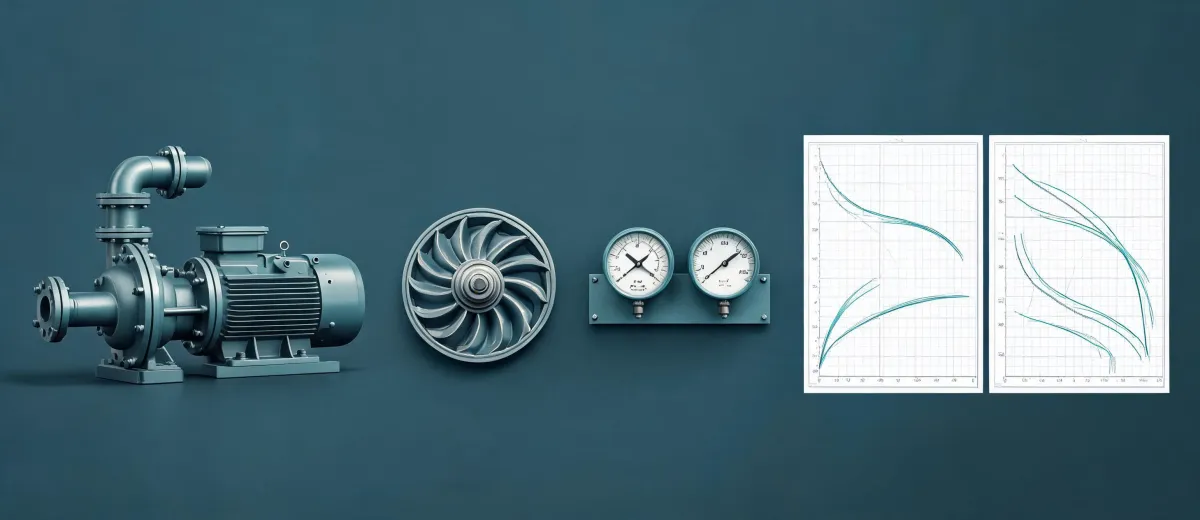
My search history that week did include “grundfos sq pumps,” but the listings started to look the same. The difference came when I talked to a person. The guy at the counter asked questions I wouldn’t have thought to ask: approximate well depth, pipe size, distance from the well to the cabin, number of bathrooms. Twenty minutes later, he recommended a specific SQ model with a flow curve that matched our setup and told me to verify it against the Grundfos technical manual before ordering.
He also saved me from a bad purchase. I had found an online listing for the same Grundfos SQ pump at roughly $350 below any legitimate quote. What most people don’t realize is that a deep discount on a brand-name pump can mean a parallel import—same box, same logo, but a unit whose serial number wasn’t distributed for our market, sold through a channel that doesn’t have to support you. I don’t know exactly how every marketplace listing works, and I’m not going to guess. I just know I didn’t want to explain to my finance director why I bought a $2,000 gamble from a storefront I’d never heard of.
We ordered through the distributor. The pump arrived three days later, with the paperwork finance actually needs. While it was in transit, I sent the maintenance team my standard email: if you need anything, put it on the list before Thursday.
The Rest of the Shopping List
Two requests came back that are worth telling you about. First, the crew at Cabin 2 wanted the hot water to arrive faster. The kitchen sink is about sixty feet from the water heater, so it used to take ninety seconds to see hot water. They asked for a Grundfos under sink recirculating pump, so that’s what I typed into the supply house’s search bar. The supplier then asked a question I didn’t expect: does the cabin have a dedicated return line?
It didn’t. That detail separates a good retrofit from a rough one. The right model for us was a small circulator sized for the actual run, installed with the right valve arrangement, not a one-size-fits-all box. I won’t pretend to install these things. I just know that “under sink recirculating pump” is a product category, not a guarantee of fit. Asking first saved us a return trip.
Second, the grounds guy needed a 16'' chainsaw chain replacement. That sounded simple. It wasn’t.
He wrote “16'' chainsaw chain replacement” on the list, and I ordered the first chain that said it fit a 16-inch bar. I knew I should ask him to read the numbers stamped on the old chain, but I thought, “What are the odds? A 16-inch bar takes a 16-inch chain.” Well, the odds caught up with me. The first chain wouldn’t seat in the bar groove—the gauge was wrong. A chainsaw chain is defined by pitch, gauge, and drive-link count, not by bar length. The correct chain finally went on because I sent him out to read the markings on the old loop and ordered the exact match instead of the “close enough” match.
The third request was the easiest. Our newest technician needed an electric screwdriver set. He had borrowed a drill and stripped a screw on a plastic junction box cover. A compact electric screwdriver set with an adjustable clutch is the right tool for that work—but it only helps if the person using it understands the clutch. Which brings me to the text I almost laughed at.
“How Do I Set the Torque on an Adjustable Wrench?”
His exact question was: how do i set the torque on an adjustable wrench?
I stared at the message for a moment, then typed the same thing into a search engine. Here’s the answer: you don’t.
An adjustable wrench—the type with the worm gear that opens and closes the jaw—has exactly one adjustment, and that’s the jaw width. It does not have a torque setting. There’s no clutch, no click, no numbered collar, and no mechanism that releases at a specific ft-lb value. The torque you apply is whatever your arm applies.
I understand why people ask. Electric screwdrivers have torque settings, with numbers on the clutch collar. But those numbers live on the screwdriver, not on a wrench. If a manufacturer specifies a torque for a fitting, the right tool is a torque wrench. If you’re driving screws, the electric screwdriver set’s clutch does exactly what a torque setting should do. An adjustable wrench is for holding and turning. Tightening plastic union nuts with one, and leaning on it hard, is a classic way to crack something that was never designed for that much force.
What I’d Tell Another Buyer
By the end of the following week, the new Grundfos SQ pump was running quietly in Cabin 4. The Grundfos under sink recirculating pump cut the wait for hot water at Cabin 2 from ninety seconds to about eight. The correct 16'' chainsaw chain replacement was finally on the saw. And the electric screwdriver set had a permanent spot in the new tech’s bag now that he knew what those numbers on the collar actually mean.
What would I tell another buyer going through the same week?
Take photos of every part before it goes in. The corroded nameplate on that old pump cost us time because I ended up digging through old invoices. Ten seconds with a camera would have saved an afternoon. Keep the original invoice in the same file, and you won’t have to guess at model numbers later.
Buy from a source that has to stand behind what it sells. I’m not saying every marketplace seller is risky. I’m saying that when a price is far below every other quote, part of what you’re giving up is usually support and traceability. Those things have a cost, and so does losing them.
Claims are not data. When a vendor makes an efficiency or performance claim, I ask for documentation. Federal Trade Commission guidance says advertising claims should be truthful, not misleading, and substantiated (ftc.gov). So I ask to see the substantiation. Grundfos publishes manuals, pump curves, and wiring diagrams. The mystery-discount seller couldn’t send anything except another screenshot. That contrast is why we paid a little more and slept better.
And yes, I still mailed the warranty registration card that came with the pump. A First-Class stamp cost $0.73 as of the January 2025 USPS rate change (usps.com/stamps). That 73 cents was the cheapest part of the whole project.
The efficiency lesson wasn’t about online versus a phone call. It was about matching the process to the risk. For a standard reorder, online ordering saves hours. For a submersible pump, I wanted a human who has answered that phone a thousand times. The right process is not always the newest one—it’s the one that gets the part, the paperwork, and the installation right the first time.