The Short Answer
Roughly 73% of our equipment cost overruns over the past six years came from sizing mistakes, not from paying too much per unit. We overpaid on exactly two orders that I can prove. The rest of the damage — call it $32,000 spread across pump replacements, compressor swaps, and wrench rebuilds — traced back to picking the wrong spec for the job, then paying to fix it later.
If you're buying Grundfos hydronic circulating pumps, a vertical air compressor, or a new impact wrench for a crew, the pricing spreadsheet is not where the money leaks. The spec sheet is.
Why I'm Confident Saying That
I run procurement for a 45-person mechanical and light-contracting outfit. I've managed our tools-and-pumps budget — roughly $180,000 in cumulative spend — for six years. That's across something like 340 purchase orders, quotes from 20+ vendors, and every invoice logged in our cost tracking system. Not a huge operation, but enough volume that patterns show up.
When I audited our 2023 spending, the vendor-level analysis was boring. Our negotiated unit prices were within 4% of market on almost everything. The interesting number was the replacement frequency. Pumps coming back early. Compressors running hot. Impact wrenches on their third rebuild inside 18 months.
Here's the thing: none of those were defective products. They were products doing jobs they weren't spec'd for.
Where the Money Actually Goes
1. Circulator and recirculation pumps
Most buyers focus on flow rate and head when they spec a Grundfos circulator, and completely miss duty cycle, water quality, and control strategy. Those three things will absolutely affect how long the pump lives in the system.
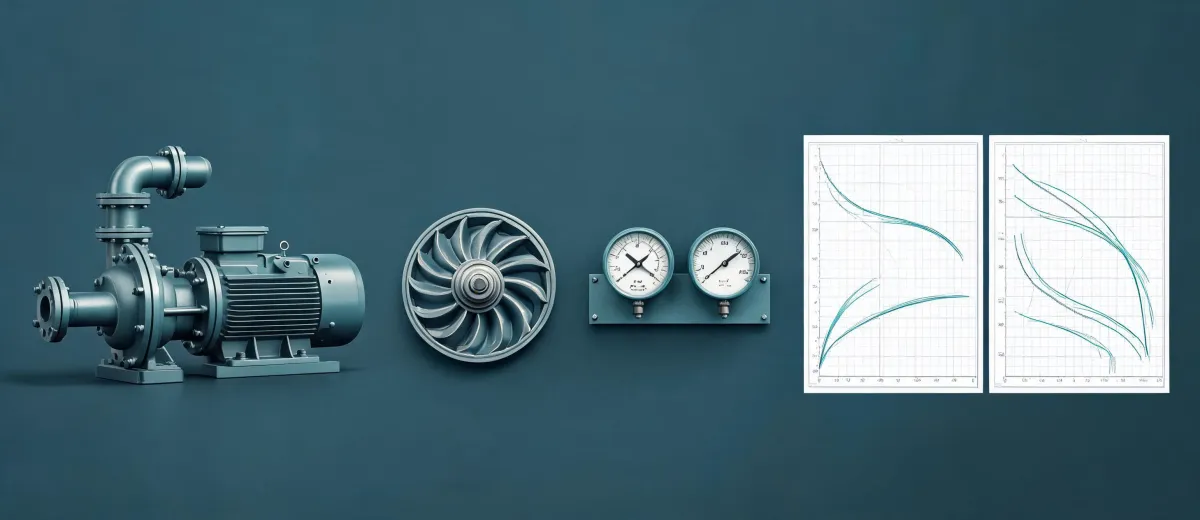
A concrete example. In Q2 2023, we swapped a standard Grundfos hydronic circulating pump for a slightly cheaper model on a 9-zone hydronic system because the initial quote looked 22% lower. What we did not do was check the pump curve against the actual system resistance after two zones were added. Six months later, the pump was short-cycling. Our service techs were out three times at roughly $190 per call before anyone realized the curve was wrong for the modified loop.
Same story with recirculation pumps and timers. I've had two customers now ask how to set the timer on a Grundfos recirculation pump after the installer left it running 24/7 for a month. That's a $40–$70 energy bump per unit per month depending on utility rates. Multiply that across a building's worth of recirc lines and it's not a rounding error.
The timer setting is not a mystery. It's a spec decision. If nobody owns that decision at commissioning, you pay for it forever.
2. Air compressor sizing — vertical and otherwise
The question everyone asks is "what size air compressor for a framing nail gun?" The question they should ask is "what's the CFM draw at the pressure my crew actually runs, and how many guns at once?"
Framing nailers typically pull somewhere in the 2–4 CFM range at 90 PSI, depending on the specific tool. One gun is easy. Three guns on one compressor, running continuous framing on a production schedule — that's a different calculation. Most of the oversizing we see is on the tank side; most of the undersizing is on the CFM-at-pressure side.
Vertical air compressors are worth calling out separately. They're a great fit for fixed shop locations because they use floor space efficiently and the vertical tank helps with condensate management. They're the wrong choice if your crew needs mobility — we made that mistake once (bought a 60-gallon vertical for a crew that ended up doing mostly on-site work) and ended up buying a portable unit six months later. That's a $1,400 swing, not a $140 swing.
3. Impact wrenches — torque isn't the whole number
Most impact wrench reviews focus on peak torque. That's the marquee spec and it's easy to compare. What they don't weigh heavily enough in my experience: drive size, breakaway vs. fastening torque, battery platform, and how the tool feels in the hands of whoever's using it eight hours a day.
We standardized on one battery platform about four years ago. Best operational decision we've made on tools. Before that, we had three platforms and a drawer full of orphaned batteries. If you're doing an impact wrench review for a team, weight the battery ecosystem as heavily as the torque spec. It's a multiplier on everything else.
One Counterintuitive Thing
People assume expensive vendors deliver better quality, so price correlates with performance. In our data it runs the other way: vendors who consistently deliver on spec can charge more because they're not eating the cost of returns and rework. Quality isn't caused by the higher price. The lower effective price comes from the quality.
That reordering matters when you're comparing quotes. A vendor quoting 15% below the others isn't necessarily more efficient. They may just be passing the rework risk to you.
When This Doesn't Apply
Two honest caveats.
First, if your operation is genuinely small and the equipment runs light duty, sizing mistakes cost proportionally less. A single-person shop buying one circulator for a residential loop doesn't need the same rigor as a mechanical contractor with 40+ service accounts. Spend your attention accordingly.
Second, there's a real ceiling on how much sizing diligence is worth. I've watched buyers spend three weeks on a $400 compressor decision. At some point the analysis costs more than the equipment. Our internal rule is: anything under $500 gets a 10-minute spec check, not a committee.
And one thing I still get wrong — I under-weight lead time. If I remember correctly, we lost about 11 days on a job last fall waiting on a pump that we ordered from the "right" vendor instead of the faster one. I want to say the delay cost us somewhere around $2,800 in crew idle time, but don't quote me on that figure — I'm reconstructing it from memory and I never fully documented the exact number (note to self: start logging delay costs as their own line item).
Spec diligence matters. So does admitting when you're not going to do it perfectly.