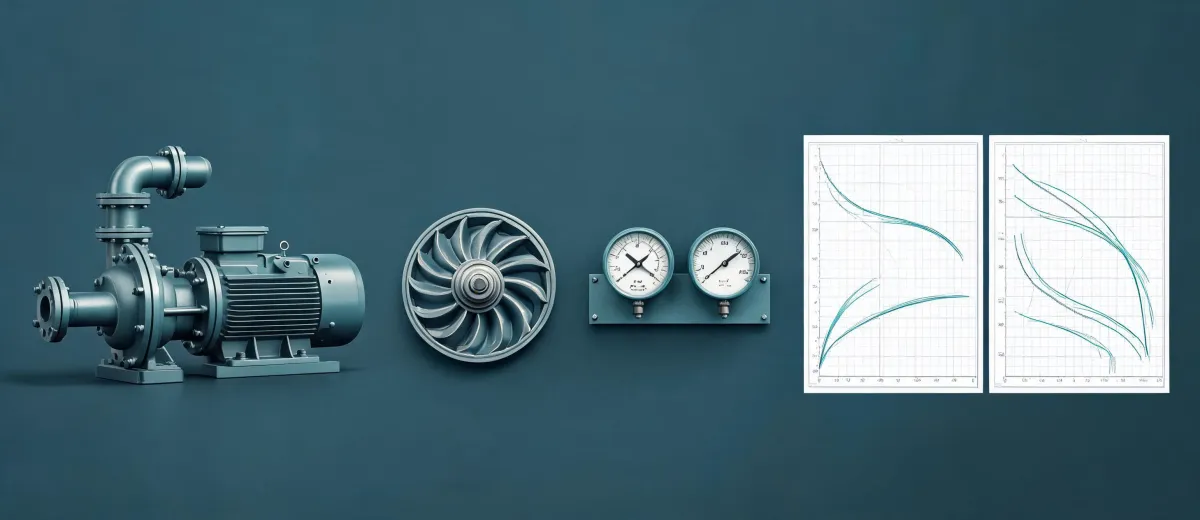
Here's the short version: a pump that's running is not the same as a pump that's working. If you need to know whether a Grundfos pump is actually moving water, measure the pressure differential between the inlet and outlet while it's running, then compare that reading to the pump curve. Sound, vibration, motor temperature, and indicator lights are clues, not proof. A quiet pump can be dead. A noisy pump can be doing exactly what it was designed to do.
I say that from a specific place: I coordinate emergency pump repairs for commercial water systems, and over the past nine years I've handled more than 300 rush callbacks. Last quarter alone, we processed 47 urgent pump jobs. In 16 of those cases, the pump itself was not the reason for the no-flow call. It was a closed valve, an air pocket, a bad capacitor, or a control setting. Replacing the Grundfos pump would have solved nothing and would have cost the customer a lot of money.
How to Tell If a Grundfos Pump Is Working: 5 Field Checks
I run these checks in the same order every time because it starts with the cheapest fix and ends with the most expensive guess.
- Verify the system is actually asking for flow. A pump can do its job perfectly and still look failed when every zone valve is closed or when the control system isn't calling. Open the relevant isolation valves and confirm there is demand on the system before judging the pump.
- Check voltage at the pump terminals, not at the breaker. A loose connection can pass a no-load voltage reading and then collapse as soon as the motor starts. Use a multimeter at the pump connection point. If voltage is below the nameplate rating, find out why before blaming the pump.
- Measure the pressure differential across the pump. This is the closest thing to a definitive answer. Install or connect pressure gauges on the inlet and outlet sides. If the pump is running but the differential pressure is near zero with the valves open, you likely have an air lock, blocked suction strainer, broken coupling, or worn impeller. If the differential pressure is high but flow is low, look downstream for a closed valve or stuck check valve.
- Clamp the motor current. Compare the running amperage to the nameplate rating. A pump drawing far below normal current is usually not loaded, which points to air, a closed suction, or a broken impeller. A pump drawing far above normal current points to a mechanical issue such as bearing wear. Use a clamp meter and follow lockout/tagout procedures.
- Bleed air from the pump and piping if the pressure reading is unstable. Air in the volute can make a pump sound active while it moves little or no water. Many field calls end with a simple venting procedure.
If you don't have pressure ports on the pump itself, use the closest serviceable gauges on the system. On a hydronic loop, you can also infer performance from temperature difference across the heat source, but pressure differential remains the most reliable way to confirm pump performance.
The pump curve matters here. Grundfos publishes curves for nearly every model in the Grundfos Product Center and in the technical manual. Look up the curve for your exact model number, not the number printed on a sticker that somebody put on the pump years ago. The data plate on the motor is the source of truth.
If the Grundfos Pump Really Has Failed
When a pump fails the checks above, replacement is sometimes faster and more reliable than a field rebuild. That's especially true when the motor or bearing assembly is damaged. But before you pull the old pump, take a photo of the data plate. That part number and serial number are the only safe way to order the right replacement, service kit, and fitting kit.
If you are replacing the pump or doing a major repair, do not reuse old flange gaskets, union O-rings, or damaged connector hardware just because they look okay. A field part like the Grundfos 99016013 fitting kit exists for that reason. It's not a motor and it won't fix a damaged impeller, but it gives you the fresh connection hardware needed to reattach the new or serviced pump to the existing piping cleanly. I've seen emergency jobs turn into second-day jobs because someone ordered the pump but not the fitting kit.
I won't tell you from memory that the Grundfos 99016013 fitting kit fits every Grundfos pump, because that would be wrong. Fitting kits are matched to product families and pipe sizes. Check the compatibility table for your pump model, or call your Grundfos distributor before ordering. Ten minutes of verification is cheaper than another truck roll.
Tools That Save Pump Repair Jobs
Most pump failures don't require cutting or welding. But when the surrounding equipment is the problem, the right tools make the difference between a one-day repair and a multi-day project.
EMP 210 multi-process welder
The EMP 210 multi-process welder is not a pump diagnostic tool. It earns its space in the shop and truck when the pump base is rusted, the mounting bolts are stripped, or a steel bracket needs to be made before a new pump can sit flat. A multi-process unit is useful because you can run different processes depending on the material and the conditions on site. For permanent repairs, weld the support before the pump goes back in, not after the system is full.
Adjustable hole saw
An adjustable hole saw gets used more than you'd think in pump work. Control panels, basin covers, and tank lids rarely have the exact knockout you need for a float switch, cable gland, or pressure sensor. An adjustable hole saw lets you cut a clean, precise opening without carrying a separate arbor for every diameter. Use a center punch to start the hole, keep the speed moderate, and let the saw do the cutting.
Angle grinder
If you're studying for an NCCER assessment and need the direct answer: an angle grinder is used to grind metal. That's the expected answer, and it's also the honest one. In field repair, I use an angle grinder for grinding down burrs, removing old weld splatter, cleaning up a sealing surface, and cutting off seized fasteners that would otherwise take too long to remove. Use the right wheel for the material, and don't force a cutting disc sideways.
Where I'd Still Stop and Call for Help
This checklist is based on my experience with pumps moving relatively clean water in hydronic and water-supply systems. If you're working on a sewage pump, a chemical dosing pump, or anything in a confined space, stop. Those systems have additional safety, ventilation, and permitting requirements. That's not a limitation I'm hiding; it's the boundary that keeps people safe.
Also, if the Grundfos pump is still under warranty, don't open it before checking with the supplier. An unauthorized repair can void coverage that would have paid for a replacement.
The fastest way to solve an emergency pump call is still the same: prove the pump isn't working before you replace it. A pump can sound fine and be doing nothing. A pump can also sound rough and still be moving exactly what it should. Measure it, check the curve, and then decide.