-
Grundfos CRN 1-3 pump specifications: what I verify before I approve it
-
Grundfos 22SQ10-160 submersible groundwater pump: the model number is just a starting point
-
Dimension 1: Installation environment
-
Dimension 2: Why submersible pump not working is usually a control issue, not a pump issue
-
Dimension 3: Serviceability and the total cost of ownership
-
Dimension 4: Documentation, country of origin, and the chainsaw question
-
So which one do I approve?
I'm a quality and brand compliance manager at a pump and tool distributor. I review roughly 200 product specs a year, and a lot of those reviews start with a simple question: does this pump match the job it was sold for? In Q1 2026 I rejected 6% of first deliveries because the nameplate or paperwork didn't line up. So when someone asks me whether to choose a Grundfos CRN 1-3 or a Grundfos 22SQ10-160 submersible groundwater pump, I don't open the price list first. I open the pump curves.
Here is the frame I use. These are not interchangeable pumps. The comparison is not about which brand is better—both are Grundfos. It's about which architecture fits your water source, your maintenance plan, and your real cost over the life of the pump.
Grundfos CRN 1-3 pump specifications: what I verify before I approve it
The CRN 1-3 is a vertical multistage pump. The '1' is the nominal impeller size in the CRN family—around 1 m³/h at the best efficiency point. The '3' is the number of stages. More stages means more head, not more flow. So the CRN 1-3 is a compact stainless steel pressure booster pump, usually piped above ground in a mechanical room or process plant.
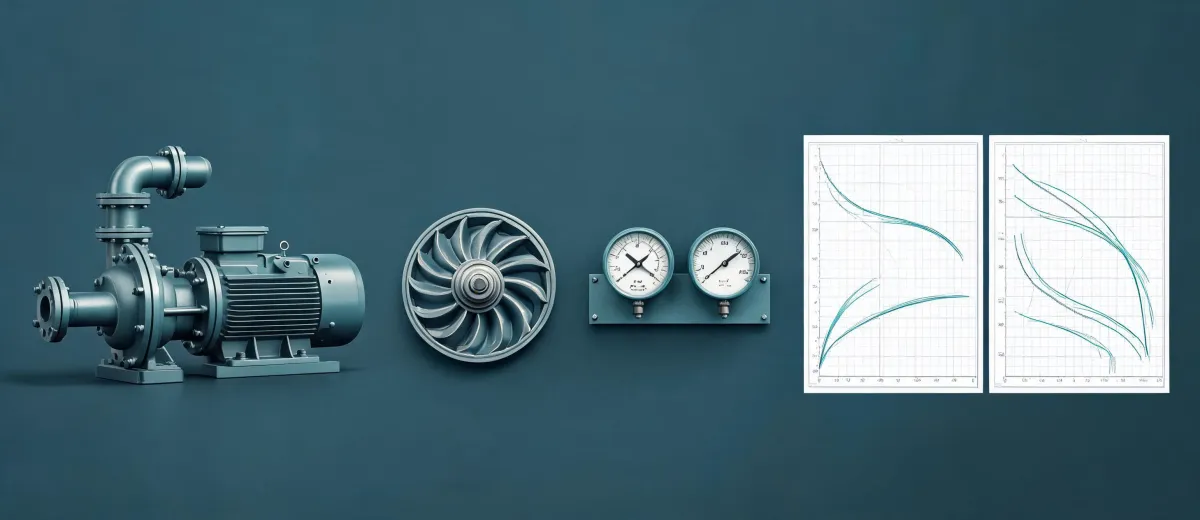
According to the Grundfos Product Center, the exact rated point depends on motor voltage, frequency, and hydraulic version. For the 50 Hz version, you're generally looking at a 0.37 kW motor, a curve that shuts off around 25–30 m of head, and a maximum flow around 2–3 m³/h. But I would never approve a replacement based on the model name alone. I need the pump curve with the actual duty point. Verify current specs on Grundfos Product Center; I last checked the data for this article in April 2026.
Grundfos 22SQ10-160 submersible groundwater pump: the model number is just a starting point
The Grundfos 22SQ10-160 submersible groundwater pump is built to sit in a drilled well or borehole. The 10 and 160 in the English-unit version point to a nominal capacity around 10 gpm and a shutoff head around 160 ft. I want to say that's how the number maps, but I'd still pull the datasheet—I've seen pump naming conventions vary even within the same product line.
What I know for sure: it's a 4-inch submersible, so it has to fit in a 4-inch or larger well casing. The motor is cooled by the water passing over it, which means it cannot be run indefinitely without enough flow. Matching the flow and head to the well drawdown is as important as the pump model.
Dimension 1: Installation environment
The CRN is for suction or booster duty where the pump sits above the water source or on the discharge side of a tank. You can see it, hear it, and feel the pipe for vibration. The 22SQ10-160 sits in the actual water source. No priming, no suction lift problem—but if the well goes dry or the water level drops, the pump can overheat before you notice. If the well goes dry, no pump on earth will fix that—seriously, that's a water source problem.
The CRN, by contrast, has to stay primed. If the inlet pressure drops below what the pump needs, you get cavitation. On the 22SQ, the well casing supplies the inlet pressure. I have mixed feelings about submersibles. On one hand, they clean up a site because there is no pump house to maintain. On the other, one bad wiring splice down the hole creates an outage that's hard to diagnose. The CRN has more exposed parts, but that's a feature if you have someone who can check the mechanical seal and motor current.
Dimension 2: Why submersible pump not working is usually a control issue, not a pump issue
I get asked this at least once a month. A customer installs a new 22SQ10-160, it runs for two weeks, then stops. The first reaction is to blame the pump. In my experience, the pump is rarely the first thing that failed. The sequence I use:
- Power supply at the control box. Check the breaker, fuse, and overload relay before you touch anything else.
- Pressure switch settings. The two trim screws on the pressure switch are not a speed adjustment. One sets the cut-in point, the other sets the differential. If you turn them without a pressure gauge and the switch table, you can make the pump cycle itself to death.
- Thermal protection. If the motor tripped, check the well drawdown, not just the motor. A low water level causes repeated starts on dry run, and that is what wears out the pump.
- Cable connection. A loose splice or wrong wire gauge will cause voltage drop and short cycling, especially with a submersible.
I once rejected a service report because the installer had left the pressure switch set far outside factory spec and called it 'customer preference.' That's not a preference—that's a failure mode.
Dimension 3: Serviceability and the total cost of ownership
The surprise in this comparison isn't that the CRN costs more than the 22SQ10-160. It's that the submersible can end up costing more over its life.
Here is how I calculate total cost: pump price + controls + installation + expected service life + service labor + downtime + risk. The CRN is accessible—or rather, accessible if you install it where someone can reach it. If a seal fails, you can change it in place with standard tools. The submersible is down the hole. Every time it needs to be pulled for inspection, the labor and hoist cost usually dwarfs the pump price. I wish I had tracked every pull-and-reset call, but I can say anecdotally that a misadjusted pressure switch caused more submersible service calls than a failed pump in 2025.
The cheapest pump is the one that doesn't get pulled out of the ground twice.
That's not a sales slogan. It's a total-cost lesson from the field.
Dimension 4: Documentation, country of origin, and the chainsaw question
At the hardware side of our counter, I hear "where is chainsaws made" a lot. People ask because they believe country of origin predicts quality. I use the same logic when somebody asks about a pump made in one country versus another. It's a data point, but it's not a spec.
What I actually verify before approving either a CRN 1-3 or a 22SQ10-160 is the serial number traceability, the test certificate, and whether the local distributor has the parts and repair history. A pump from a gray-market source can come with the right country label and the wrong motor. The labeling is the last thing I trust.
So which one do I approve?
Choose the Grundfos CRN 1-3 when the water is already under positive pressure or you need to boost it in a mechanical room, you have maintenance staff who can see the pump, and you need stainless steel hydraulics in a compact vertical footprint.
Choose the Grundfos 22SQ10-160 submersible groundwater pump when the water source is a well, you need a 4-inch submersible, and the practical place for the motor is underground.
If you're still comparing them after reading the application section, the answer is not the pump model. The answer is the water source. I know that sounds too simple, but it's the first thing I check as a quality inspector, and it catches more wrong orders than any other single point.
Before you place the order, ask for the pump curve, the motor nameplate table, the pressure switch setting table, and the test certificate. If a supplier can't provide those, I would reject first delivery. That's not being difficult—it's the difference between a pump that's right on paper and one that's right in the ground.