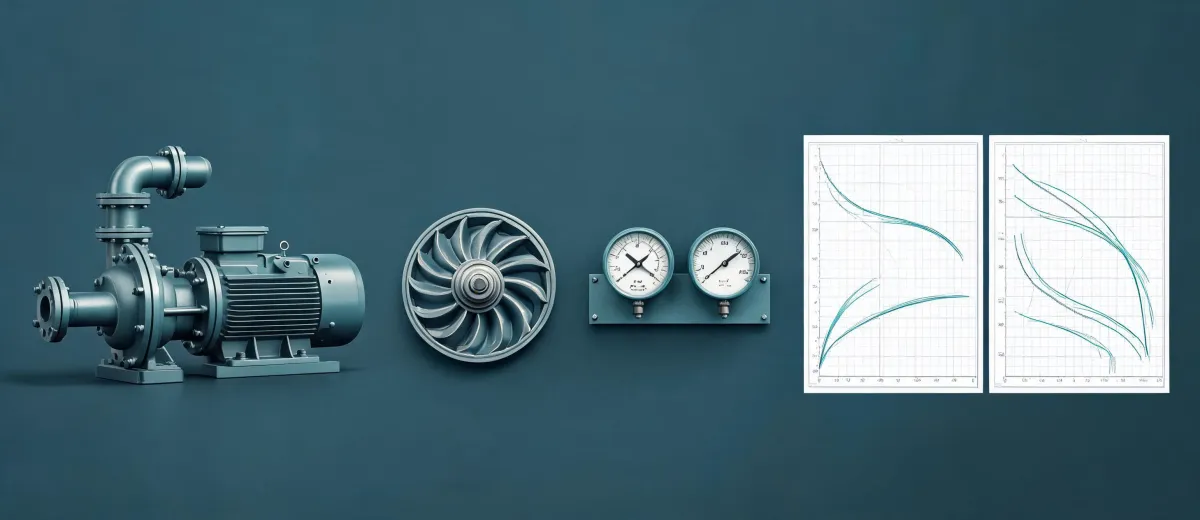
The Surface Problem: A Pump That Won't Stop Cycling
In Q2 2024, I got a call from our site lead. The Grundfos CMBE 3-30 booster pump 98810922 was cycling every twenty seconds. The pressure gauge would climb to 45 psi, then drop to 30. Second-floor faucets were sputtering. My first thought was the same one most people have: the pump is done. Replace it.
I'm a procurement manager at a 40-person facilities company, and I've managed about $180,000 a year in maintenance spending for the last six years. I've reviewed hundreds of invoices, pump curves, and warranty claims. That doesn't make me an engineer. It makes me skeptical of expensive answers that don't have evidence.
The replacement quote was $1,150 plus labor. I didn't sign it. Here's why.
The Real Problem: It Usually Isn't the Pump
When I stopped staring at the price and started looking at the system, the "dead pump" turned out to be a thirsty pump. The inlet strainer was clogged with calcium scale. The pressure tank had no air charge. And the discharge union was leaking because the installer had used an adjustable wrench to overtighten it, which deformed the sealing washer.
The numbers from the service history said replace the pump. My gut said slow down and look at the inlet first. The gut was right.
Grundfos's CMBE installation and operating instructions list the same suspects for short-cycling: insufficient inlet pressure, air in the pump casing, a faulty pressure tank, a clogged inlet filter, or a faulty sensor. The instructions are clear: fix those before replacing the pump. But when a pump is cycling, the cheapest next step is always a new part—if you don't know how to read the system.
Here's the part that trips people up. A common question I get is: how do I set the torque on an adjustable wrench? Short answer: you don't. An adjustable wrench is a gripping tool, not a measuring tool. It doesn't set torque. If a fitting needs 30 ft-lb, an adjustable wrench will happily give you 15 or 45 ft-lb. That's how you get leaks, stripped threads, and mysterious pressure drops. The union on our CMBE 3-30 was a textbook case.
So the deep cause wasn't one bad part. It was a system of skipped checks. No one cleaned the strainer. No one checked the tank bladder. No one verified that fittings were tightened to spec. The pump was running in conditions that slowly damaged it. That's the real enemy.
The Cost of Ignoring It
After we fixed the strainer and recharged the pressure tank, the pump held a steady 40 psi. The second-floor faucets stopped pulsing within a day. Even after that, I kept second-guessing: What if the internal seal was already damaged? What if the pump failed a week later? I didn't relax until the pump ran through a full week of normal use without a single cycle issue.
Then I did what I normally do after a near-miss: I audited the service records. From 2021 through 2024, we had 14 pump-related work orders totaling $23,800. Nine of those were avoidable—they came from the same pattern: blocked inlets, undercharged pressure tanks, or loose or over-tightened fittings. That's roughly $15,300 spent on problems a 15-minute checklist would have caught.
We didn't have a formal pump inspection process. That was the process gap. The third time we replaced a seal that shouldn't have failed, I created a checklist. Should have done it after the first time.
This isn't just a pump thing. I see the same math when I buy tools. Every spring, I compare lawn mower deals for our grounds crew. A $149 mower looks like a bargain until you check the parts availability and read the assembly reviews. And I keep 2 classic pruning shears reviews saved in my cost-tracking spreadsheet: one for a $12 pair, one for a $35 pair. The $12 pair felt fine in the store, but the long-term reviews showed blade alignment issues and no replacement parts. The cheap option cost more by June.
That's the hidden cost trap. The price tag is visible. The maintenance, rework, and downtime are invisible until you've already paid them.
The Short Version: What I'd Do Differently
If you're past the point of "should I check it?" and staring at a CMBE 3-30 that won't hold pressure, here's the abbreviated version. It's shorter than the problem because the problem was mostly neglect.
- Check the inlet strainer first. A clogged strainer is a leading cause of CMBE inlet starvation. Clean it before you test anything else.
- Check the pressure tank precharge. It should be set around 70% of the cut-in pressure, per the tank manufacturer's spec.
- Look at the pump, not just the screen. Air in the casing, a faulty sensor, or a damaged seal won't always show up on a multimeter.
- If you have to remove a fitting, don't ask how to set the torque on an adjustable wrench. Use a torque wrench, or a crowfoot wrench with a torque wrench, and follow the torque spec. If you don't know the spec, look it up. An adjustable wrench isn't a substitute.
- Track every repair cost. The spreadsheet is what tells you whether prevention is working.
When you're buying anything for the job—pump replacement parts, mowers, shears—use reviews, other buyers' experience, and the manufacturer's documentation before you look at the price tag. According to Grundfos's CMBE documentation, the pump is designed to operate within certain inlet pressure and flow conditions. Violate those, and the pump will eventually fail. That's not a sales pitch. That's a spec.
One more note on deals. Per FTC advertising guidance (ftc.gov), claims need substantiation. "Best price" isn't evidence. The same skepticism that saves you money on lawn mower deals and pruning shears applies to pump repairs: ask for the evidence before you approve the expensive answer.
I still kick myself for not auditing our pump service schedules earlier. If I had, we'd have skipped a two-week outage and at least $15,000 in wasted work orders. The fix was boring: a checklist, a torque wrench, and a precharge gauge. Boring is fine. Boring is cheap.